Monday, February 15, 2021

Thinking is Hard

"I'm going to fight for you"

"I'm not one of those cocktail party circuit politicians"

"I'm going to protect your Second Amendment"

"We need someone who represents real [fill in your state]"

"I'll never support socialism" 


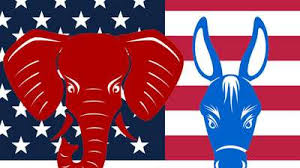
What do all of those quotes have in common? They're all quotes from people running for public office. What does any of it mean? Just about nothing. So why do we keep hearing those kind of quotes? Because people don't really want to think, and any specifics about what kind of policies a candidate will support bores most voters. What we end up with is vague platitudes, irrelevant "brave" stances, and elected officials who have no idea how anything works. It's how in Nebraska we end up electing Republicans year after year because most Nebraskans are convinced that the Democrats are socialists and we're against socialism even though we're not sure what specific proposals are socialistic and why they're bad. It's not a whole lot better in "blue" states. And it's not just that voters don't want to think, it's candidates who don't understand how governing works. We get candidates who believe that because they ran a business they can be a successful governor or senator; or because they're a "typical" [fill in your state] then they'd be up for the challenge of legislating. This doesn't mean that someone who was a bartender or an optometrist, or a restaurateur, or even a CEO can't be an effective legislator or governor or president, just that being a CEO or a regular Joe are not qualifications in and of themselves. 

Naïve and inexperienced people getting elected don't end up changing the institution, they end up, due to their inexperience, being led by the old hands who have been there for decades. There is a process to lawmaking. I've said before that I'd support a requirement that elected officials have some experience. Senator shouldn't be an entry-level job (nor should the presidency for that matter). I don't like Senator Deb Fischer, but she at least had some experience in our state legislature before running for Senate (not that she's done anything but toe the party line since her election). Mike Johanns was a county board member, city councilman, Lincoln Mayor, and governor before he was a senator. George W Bush and Bill Clinton were governors before being elected president. You can disagree with their policies, but they knew the process, they understood how things worked. 

But these inexperienced people get elected, and because they were elected by people who didn't think about their choice, they're forced to continue to govern, using the term loosely, by demagoguery, or as I've said before, by urban legend. We get Nebraska legislators posturing about gun rights, even though there are no efforts in the Unicameral to restrict gun ownership. We get members of the House of Representatives and the Senate spending their time propping up insane conspiracy theories instead of attempting to solve our country's many problems. 

Maybe before the next election we ask the candidates to be a bit more specific than "I'll fight for you". 

Fact-Checking

Since the previous president of the United States had an arms-length relationship with the truth, self-described fact-checkers have kept very busy over the last five years. I concede that politicians often play fast and loose with the truth, exaggerating information that is beneficial to them and downplaying what goes against their agenda. Did I say "politicians", I should have said "people". Some things that a politician says are just a matter of opinion. An elected official could be pressing for a course of action where we won't know the results until we actually commit to it. Military involvement overseas is a good example of that. When we send our military into another country we don't really know what will happen. We don't know how the citizens of the other country will react, how neighboring countries will act or even how effective our military strategy will be. For other things, like economics, we have experts who have opinions based on the past, but not all the experts agree and unforeseen consequences often occur. Then there are statements that can easily be checked for veracity. If the president makes a statement about our trade imbalance, there are government statistics that can be referenced to verify the truth of that statement. If someone accuses a candidate of saying something, a video of the event at which it allegedly occurred can probably be found. Statements of fact are rather easily checked. Most of us, however, have days that are taken up by work, home life, family, community, etc and don't have the time or the resources to confirm everything a politician says. So we have people who specialize in fact-checking. 

One of the first dedicated fact-checking sites that I became aware of was Snopes.com. It started out as a site that looked into the so-called urban legends, but eventually started fact-checking other things, including statements by and accusations against, politicians. Other sites, such as Politifact, specialized in politics. Daniel Dale, now with CNN, dedicated the last four years to fact-checking virtually every statement made by the previous president. Unsurprisingly, a president who usurped the phrase "fake news", soon began to undermine his supporters' faith in independent fact-checkers, including them under his "fake news" umbrella. I'll say that it is important to consider the bias of a news organization and of a fact-checker, but just because a fact-checker debunks your pet conspiracy theory doesn't mean that it's unreliable. 

A reliable fact checker doesn't merely deny the in-dispute information, he cites sources, written, as well as audio and video records. These sources can then be verified by anyone who is interested in the truth of the matter. An example is the Electoral College margin of victory by the previous president in 2016. He repeatedly claimed that it was "historic", "a landslide", the "greatest margin of victory" and other superlatives. The New York Times ran a story showing that of 50 elections it was the 45th most decisive, (I may not have the exact numbers) not the "greatest". The New York Times cited their sources, which verified their conclusions. I decided to go one step further and found other sources, all of which confirmed the Times' fact-checking. A simple assertion is not fact-checking. An unsupported statement is not a debunking. Good fact-checkers will provide enough information for you to see how they arrived at their conclusions. 

Saturday, February 13, 2021

Republicans Can Kiss My Ass

Both of our two major political parties have traditionally been "big tent" parties. Both have been the home to a range, a continuum, of political and economic views. In my voting life I have voted for Republicans, I have voted for Democrats, I have voted for Libertarians, I have voted for Independents. On many of the left-right ideological divides of the day reasonable people can disagree on the best way to address issues. Most issues cannot be simplified down to right or wrong, black or white. Economic plans that seem straightforward often have unintended consequences. Sometimes the thing you were against turns out to be not so bad and the thing you were for an unmitigated disaster. 

All of that has become moot. The modern Republican Party has become a danger to the nation. It has become inherently immoral. 

There have always been differences between the parties and there has always been bare knuckle brawling and dirty tricks. However, I trace the start of what the Republican Party has become to the nineties and the rise of Newt Gingrich. Democrats had been the majority party in Congress for most of the previous 50 years at that point. Gingrich's plan to put the Republicans in the majority mainly rested upon demonizing the Democrats and included impeaching President Clinton for lying about oral sex. The next main phase began when President Barack Obama was inaugurated. Senate Minority Leader Mitch McConnell's stated goal (not at all implied, he said it out loud) was to make Obama a one-term president. He used every trick in the book to block virtually everything Obama tried to do. He pretended to work with Obama in crafting the PPACA, winning concessions and compromises, but no Republicans voted for it in the end. Obama was only able to get that done do to a 60 vote, filibuster-proof majority in the Senate his first two years. McConnell continued to obstruct after the Republicans gained the Senate majority, blocking confirmation of judicial nominations and stated that his proudest moment was denying Obama a Supreme Court confirmation in his final year in office. 

The next phase was during the Trump presidency. A Republican majority in both houses pushed a massive tax cut...not for ordinary Americans, but for corporations. Once the Democrats regained the majority in the House of Representatives, McConnell refused to consider any bills passed by the House, the Senate functioning merely as a judicial appointment mill. He changed his mind about confirming a Supreme Court appointment in a president's final year, rushing through a confirmation in the final month before the election, not even embarrassed about the hypocrisy. 

In case you believe that the Republicans were acting this way only in Washington DC, Republican legislatures in several states voted to reduce a governor's power after a Democrat replaced a Republican in the governor's mansion, Republican governors or legislatures delayed or overrode a vote of the people in several states. In Nebraska, the Republican governor financed primary challenges of fellow Republicans who did not support his legislative proposals. Republican proposals to make it more difficult to vote proliferated. 

Back in Washington, most Republicans declined to so much as mildly criticize a President who was off the rails, even after he spent months trying to overturn the election and inspired his followers to attack the US Capitol. The Republican Party, as bad as it was before the 2016 election, has turned into a cult of personality, loyal not to the country or even conservative principles, but to one person. The few Republicans who do speak out are censured by the party and derided as "not real Republicans". 

I'll never vote for a Republicans ever again.

Republicans can kiss my ass. 

Tuesday, February 9, 2021

No, Trump Will NOT Be Sworn in as the 18th President on March 4th

There's an idea making the rounds that, despite having lost the election, Donald Trump will be inaugurated as president on the "real" Inauguration Day, March 4th. Believers in this assertion maintain that Washington D.C. is "foreign soil" and that President Biden's oath of office is null and void. Adherents to this view point to the District of Columbia Organic Act of 1871 to support their ideas. According to them, in 1871 the District of Columbia was organized as a corporation separate from the rest of the United States and subject to international banking laws, making the district, no longer a part of the United States of America, but a separate, foreign, entity. Related ideas, which first saw the light of day in conjunction with the "sovereign citizen" movement, further claim that the United States ceased to be a Republic at this time and the whole country was now a corporation called THE UNITED STATES CORPORATION (they apparently feel that the use of all capitals in this case is significant). This makes any Constitutional amendments passed after 1871 null and void, and any presidents who served after 1871 illegitimate. Many in the sovereign citizen movement use this rationale to assert that the government of the United States as we know it has no authority over them; QAnon Trumpers have taken this belief one step further, fantasizing that Trump will somehow reverse the supposed illegal conversion of the U.S. into a corporation and be sworn in as the eighteenth president of the United States (Grant, as the seventeenth, was the last legitimate president according to this world view).

There are a few problems with this whole scenario. 

The seat of the nascent United States government was to be a ten mile square (10 miles x 10 miles) at a site chosen by Congress. The district was created from land ceded by the states of Maryland and Virginia and initially was a square, ten miles on a side. Within this square, the cities of Georgetown, Maryland and Arlington, Virginia already existed. The new city of Washington was designated as the nation's capital city. Each of the cities maintained their own municipal governments. In 1846 the portion of the district on the Virginian side was returned to Virginia. 

There were many reorganizations that took place over the years. Before the infamous 1871 act, the city of Washington (which was incorporated in 1802 by the way) and the district area outside the city were administered separately, with several changes to the method of administration over the years. The 1871 act merged Washington, Georgetown and the unincorporated areas of the district into one territory, and appointed a territorial governor. It's at this point that the district was incorporated. This does not mean that it became an independent corporation, like General Motors or Amazon, but it was, and still is, the method by which an unorganized area becomes organized into a recognized entity. Every city, town and village in the country is a corporation. Occasionally you'll run across small towns that are unincorporated. This is not some insidious plot to move the seat of government by sleight-of-hand outside the jurisdiction of the Constitution. It's a mundane, ordinary, run-of-the-mill way of organizing a municipality. The idea that the District of Columbia is a foreign entity is a fringe idea not supported by facts. The associated idea that this 1871 Organic Act not only turned DC into a foreign entity, but abolished the United States as a Republic but turned it into a corporation that somehow is existing in some legal limbo has even less solid ground to stand on. Trumpists are grasping, not only at straws, but imaginary straws, in order to keep the hope that their savior, in the face of defeat after defeat, will prevail. 


Saturday, January 23, 2021

Impeachment of an Ex-President: Constitutional or Not?

 There's been a lot of discussion about the upcoming Senate trial of former President Donald Trump following his second impeachment. The topics of discussion include whether he actually committed an impeachable offense to the impeachment procedures in the House to whether it's even constitutional to hold a post-impeachment Senate trial for a former president. Most of the people who weigh in on social media against proceeding usually throw around the assertion that the whole process is unconstitutional while unable to point to the part of the Constitution that is being violated. 

Let's start with the Impeachment itself. While it might seem counterintuitive, an impeachable offense, within certain bounds, is what the House of Representatives says it is. The term "high crimes and misdemeanors" is not defined in the Constitution itself, but it's meaning at the time the Constitution was written suggests that it was interpreted broadly and not meant to be tied to any specific laws or ordinances. While "incitement of insurrection" may not be provable in a court of law, it does not need to be. While the recent impeachment may not conform to legal proceedings we have become used to after watching decades of crime procedurals and cop shows, if a majority of the House of Representatives decides that an action by the president is impeachable, then he's impeached. It may not seem right or fair, it might seem to be partisan head hunting, but it does not contravene the Constitution. 

A specific objection that I saw today was that the recent impeachment was unconstitutional because Trump's words that have been construed as incitement to insurrection were protected speech under the First Amendment. This objection ignores the fact that not all speech is protected speech, the cliché "you can't yell 'fire' in a crowded movie theater" is illustrative of this point. One might reasonably argue that Trumps' words didn't constitute an incitement to insurrection, but you can't argue that it was automatically protected speech just because it was speech. Even First Amendment protection from government censorship does not immunize one from the consequences of that speech. 

An objection to proceeding with the Senate trial is that Trump cannot be removed from office as a result of a Senate conviction because he is no longer an occupant of the office. There are two ways that this is argued, one is the practical, the other constitutional. The practical objection is that it's a waste of time, since he's already removed by dint of his term having expired n January 20th. The answer to this objection is that upon conviction Trump can be subject to "disqualification to hold and enjoy any Office of honor, Trust or Profit under the United States". So it's not really a moot point, since there are further consequences beyond removal, which is moot. The Constitutional objection is a bit messier, and not totally clear.

One view is that the impeachment clause of the Constitution lists those people who are subject to impeachment. They are the President, Vice President, and all civil officers of the United States (which includes federal judges and cabinet officers) and that an ex-president is not on that list. The contrary view is that nothing in the Constitution prohibits a former president from being impeached or being tried in the Senate after impeachment. There is only one precedent upon which we can refer to: in 1876 Secretary of War William Belknap resigned as the House of Representatives was contemplating impeachment. The House impeached him anyway, and the Senate held a trial, with a majority agreeing that it retained impeachment trial jurisdiction despite the resignation. He was acquitted, with a majority that was less than the two-thirds, voting to convict. A number of Senators that voted to acquit expressed doubt about whether an impeachment of a former official conformed with the Constitution. This precedent has never been applied in the case of a former president. 

So there's nothing that unambiguously permits or prohibits the impeachment or subsequent Senate trial of a former president, despite assertions of unconstitutionality by the Trumpists. Whatever the scholars or those with unwarranted confidence in their knowledge of the Constitution may believe, the trial has been scheduled. 


Thursday, January 21, 2021

Unity

Some years ago a was involved in a car accident. Another driver wasn't paying attention and blew through the intersection hitting my car square on the driver's side. As I looked at the vehicle speeding directly at me I was sure I was going to die. My car was totaled, but I walked away from it without a scratch. I was angry at the damage done to my car, but was relived that I was alive and unhurt. The feeling was similar to how I felt on Inauguration Day this year. Not that I thought President Biden was the savior that would fix it all, right all the wrongs and heal all wounds, but that our nation had made it through the last few years - and that we still had a nation. If anyone had any doubts about how unfit for the presidency Trump was, the two and a half months between the election and the inauguration, with his ham-handed attempts to overturn the election and his pardons of corrupt politicians, should have knocked them off the fence. 

Somehow the myth that those who opposed him did so because we were offended by his crude, coarse manner, that he wasn't "presidential", or that he allegedly spoke his mind, was accepted by his most ardent supporters.  In fact, most of what he accomplished was boilerplate Republicanism: lower taxes on the rich, eliminating regulations and lots of anti-immigrant rhetoric. What most of us disliked about Trump was his gleeful stoking of hatred and division, labelling anyone who disagreed with him as anti-American, going so far as to call the mainstream media "The Enemy of the People" and suggesting that his political opponents be locked up. Any hope that we had that he would settle into the job, listen to the advice of "the adults in the room" was squashed pretty quickly. His documented lies reached the tens of thousands. His ignorance, not only of how government worked, but of basic economics was abysmal. His contempt for our allies and solicitousness of our enemies was worrying. His persona was that of a petulant child, when he wasn't acting as the playground bully. He had barely dodged the bullet that was the Mueller Investigation when he attempted to bribe the president of Ukraine in order to start an investigation of Joe Biden and his son Hunter. His incompetence and laziness came to the fore as he ignored the seriousness of the Covid-19 virus that has so far killed 400,000 of us. 

While I probably would have voted for a can of green beans over Trump, Biden, whatever his shortcoming's, is someone who takes the job seriously, has the knowledge and experience needed for the job, and in contrast to his predecessor, sees himself as the president of all Americans, not just those who voted for him. He has the perhaps unlikely dream of our nation being united. 

Let's talk about unity. The reality is that we are a deeply divided nation. A not insignificant minority believes that his election was fraudulently won. There are deep disagreements on just about everything. There is an impeachment trial still pending in the Senate for the former president. The progressive faction of the Democratic Party thinks Biden is just another establishment hack; Trump's core of support think he's a communist. No matter what he does or doesn't do is going to make somebody mad. But unity and governing with eye to making decision's that are best for all Americans isn't about accomplishing the impossible, i.e. making everybody happy. It's about doing what's overall in the nation's best interest, knowing that not everyone agrees on what the best interest is. 

There are two competing realities. One is the old saying "elections have consequences". Not only did Biden garner a healthy majority of the electoral votes, the exact same number that Trump claimed as a landslide in 2016, but unlike Trump, he also received a healthy majority of the total votes cast nationwide. Surely this gives him the right to honor his campaign promises and take whatever unilateral actions that are available to him, even if the Republican Party doesn't like it. The second reality is that his party has only a slim majority in the House of Representatives (221-211, with 3 vacant seats - it takes 218 votes to reach a majority) and a 50-50 tie in the Senate, with several conservative Democrats unlikely to support what the consider any ultra-liberal proposals. These slim majorities will make it all but impossible to get anything done with the cooperation of at least 10 Republican Senators, since the filibuster still exists for legislation, although not for judicial appointments. Mitch McConnell is still the leader of the Republican caucus.

Let's not forget that it was Mitch McConnell who obstructed everything that President Obama attempted accomplish. It was Mitch McConnell who stole a Supreme Court nomination based on the suspect reasoning that a president shouldn't be able to appoint a Supreme Court Justice in his last year in office, a reasoning that he conveniently changed when it was Trump who had the opportunity to nominate a justice during his last month before the election. It was Mitch McConnell who virtually shut down the Senate, except for judicial appointments, refusing to consider any bills sent over from the House of Representatives. I don't envision much legislation getting passed. We're already hearing from politicians like Ted Cruz who think "unity" means that Biden and the Democrats roll over for the Republicans, as if Biden hadn't won the election.

This isn't very optimistic, I know. But it's realistic. There's still a lot that President Biden can do without the cooperation of the Republicans. He can fill judicial vacancies, he can appoint people who support the mission of the cabinet departments, instead of those whose goal was to dismantle them under Trump; he can re-engage us with the international community and strengthen our alliances; he can re-institute environmental protections that were gutted in the last four years. 

He can take the job seriously.


Sunday, January 17, 2021

Burger Flipping

Now that President-Elect Biden has signaled his support for an increase in the federal minimum wage to $15, the critics of such a move have already been busy with their insulting characterizations of people who make the minimum wage. 

Arguments against the minimum wage increase:

* It's just high school kids working those jobs, they'll graduate and find something better

* If you don't like making minimum wage, find a better job

* It's unskilled labor

* Paramedics make $15/hour (or really, fill in your favorite profession that already makes $15/hour or slightly more) - are you saying "burger flippers" are worth as much as paramedics?

* Companies will go out of business or lay off employees if forced to increase wages

Let's dispense with the economic argument first. Research has shown that increasing wages, counterintuitively, doesn't cause businesses to close or to lay off workers. 

https://www.businessnewsdaily.com/8984-increased-minimum-wage.html#:~:text=Researchers%20say%20raising%20the%20minimum,businesses%20or%20reduce%20job%20opportunities.

Business owners by and large are not philanthropists. They will take whatever action is necessary to maximize profits. If they voluntarily raise wages, it's usually because of outside pressure. Often it because of increased competition for employees due to low unemployment. Your paycheck is based, not on what you need, but on the lowest amount that your employer feels they can get away with paying you. If revenues increase for whatever reason, fewer competitors, lower costs or reduced taxes, most employers will not turn around and increases wages because they don't have to

The idea that all or most minimum wage jobs are filled by high school students is also a myth. While it is true that high school kids, if they are working, are working in minimum wage jobs, people from all walks of life are working in low-paying jobs for a variety of reasons. Higher paying positions typically require specific training or education. This may shock people who are college graduates, but not everyone can afford to go to college. Of course there are alternatives, two of my children joined the military. One is a career NCO and the other combined student loans with support from the military to get a college degree and a teaching job. Two of my children have union jobs with decent pay and benefits. Circumstances and decisions made years or decades ago will affect ones ability to find a high paying job. Single parents with young children are often limited in the jobs that they can take. Some people, often through no fault of their own, do not have the education or training that would qualify them for a higher paying career. 

The bigger picture that is often overlooked is that these lower paying, lower status jobs are still necessary. If we want there to be restaurants where we can enjoy a nice dinner in our free time with our discretionary income, someone has to be "flipping the burgers". In virtually any industry there are "front line" workers who do the bulk of the work, who get things done. This is not to say that supervisors and administrators are not necessary, but that there would be nothing to supervise or administrate without those front line workers. In any business that I have ever been in, if every non-manager had called in sick the place would have fallen apart (and I say that having been a manager at most of the businesses where I was employed). A related issue is that in most industries the only way to advance, i.e. to make more money, is to be promoted to management. The problem with this is that management is a skill set that is separate from the underlying business. You may be the best [fill in the blank] but may have no ability to effectively supervise your former peers or manage the business that you are engaged in. But most positions have a maximum wage rate, and once you reach that ceiling, you have one option: become a manager. This paradigm ignores the likelihood that a front line workers with many years of experience will bring more value to the business than a rookie with the same job title. 

The last item that I will address is the comparative value argument. Usually it takes the form of comparing the average compensation of paramedics or teachers to the $15/hour suggested minimum wage and implies that minimum wage workers aren't the equals of paramedics or teachers. This isn't the slam dunk that opponents of a minimum wage increase think it is. It's an argument for increasing the remuneration of teachers and paramedics. And speaking of comparisons, some studies indicate that if the minimum wage kept pace with inflation and productivity increases, it would be $24/hour.